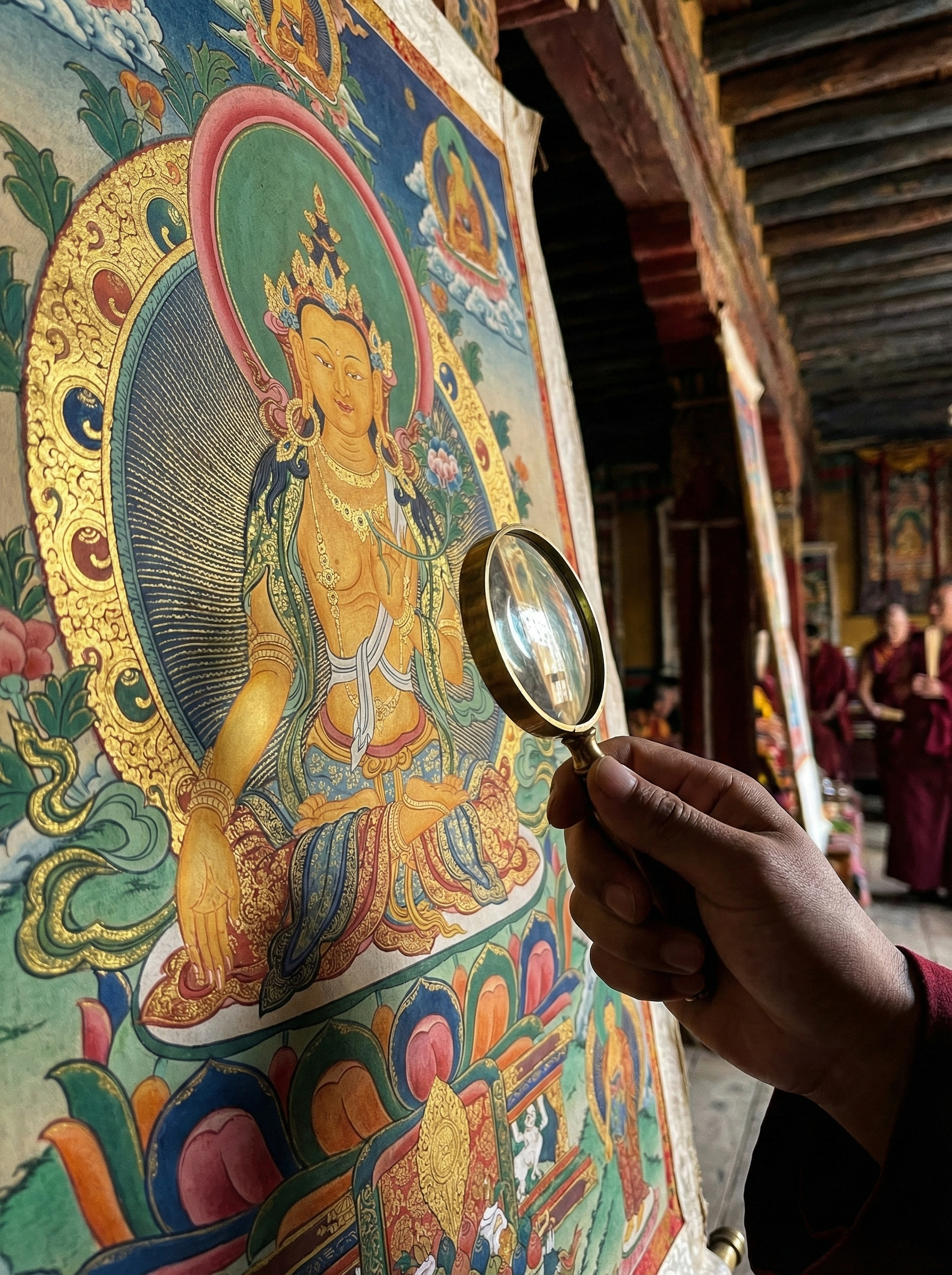
How to Identify a Thangka
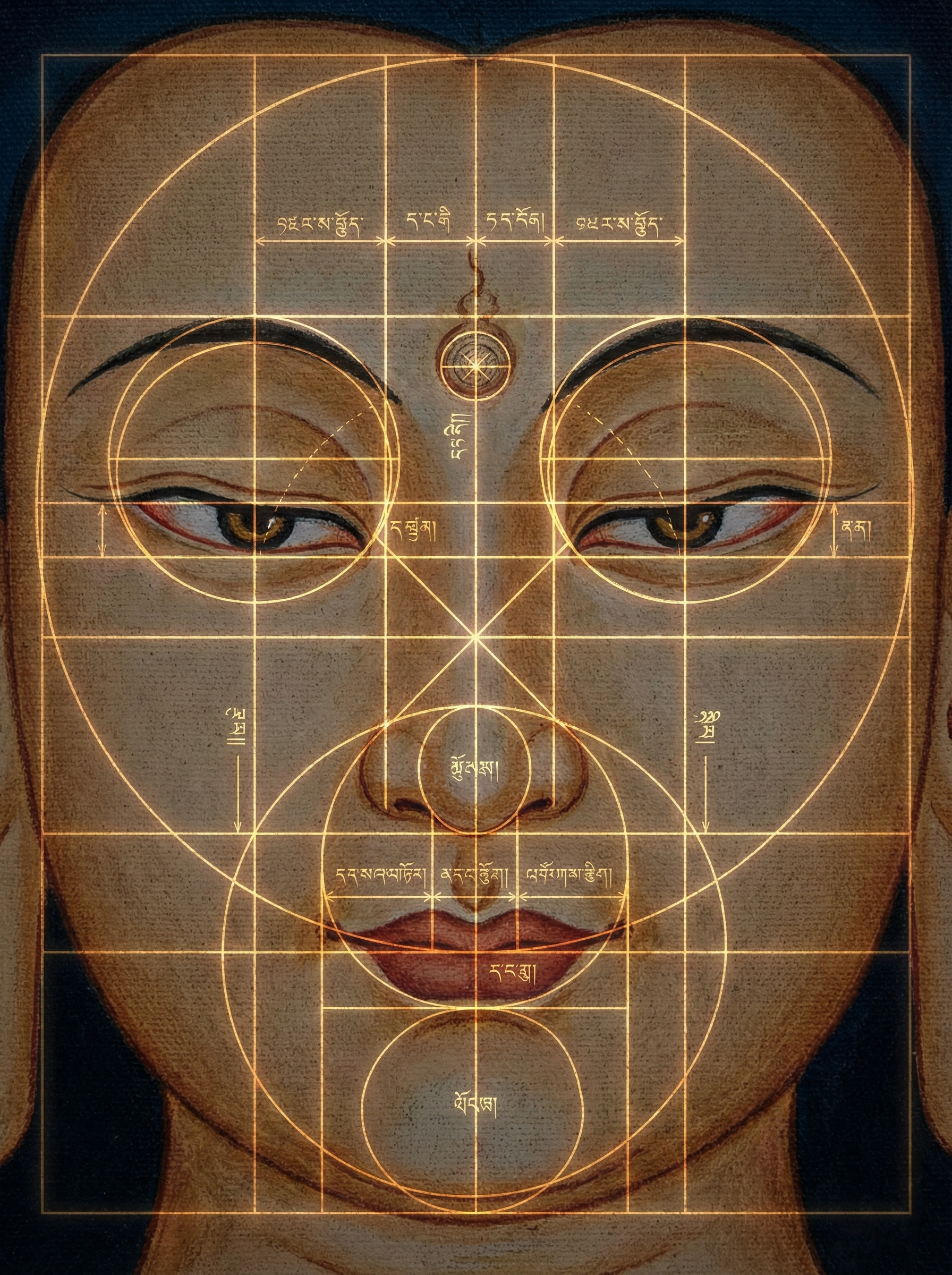
1 Proportions: The "Skeleton" of a Thangka
Proportions are the soul of a Thangka and where the artist's skill is most tested.
What to look for:
Whether the facial features, proportions, and body movements of the Buddha statue strictly adhere to
the "Sutra on the Measurement of Buddha Images."
Avoid:
Even a slight deviation in the length of a finger or the position of an eye
can disrupt the overall sense of solemnity.
Incorrect proportions lead to a complete loss of spiritual essence.
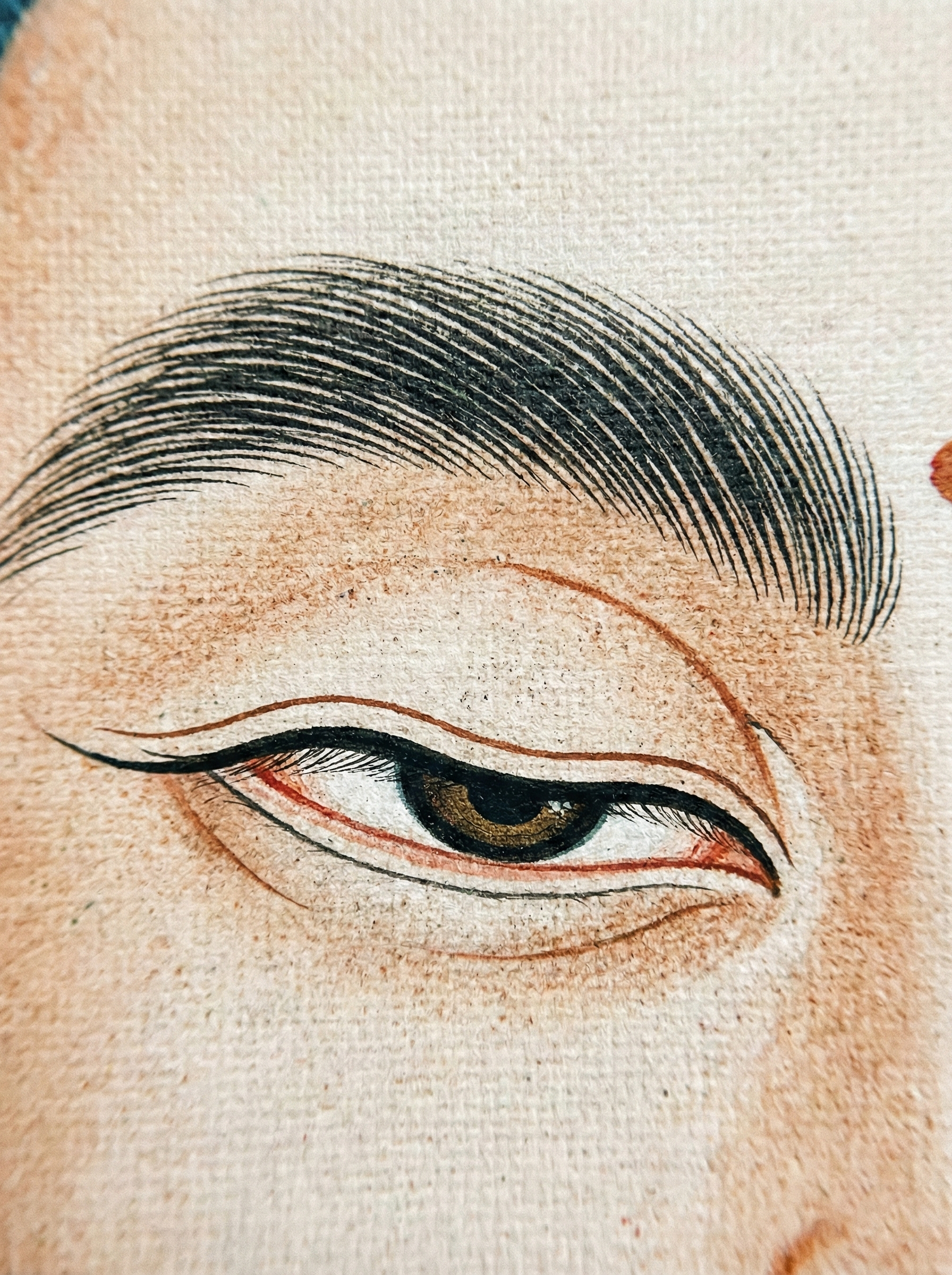
2 Lines: The Flowing "Lifeline"
Good lines flow like clouds and water, without any sense of interruption.
Body lines:
Should be rounded and soft, showcasing the elasticity of muscles.
Drapery lines:
Should be flowing as if blown by the wind, with natural and smooth transitions.
Details:
Are the hairs and eyebrows as fine as ox hair and distinctly rendered?
This is key to distinguishing apprentices from masters.
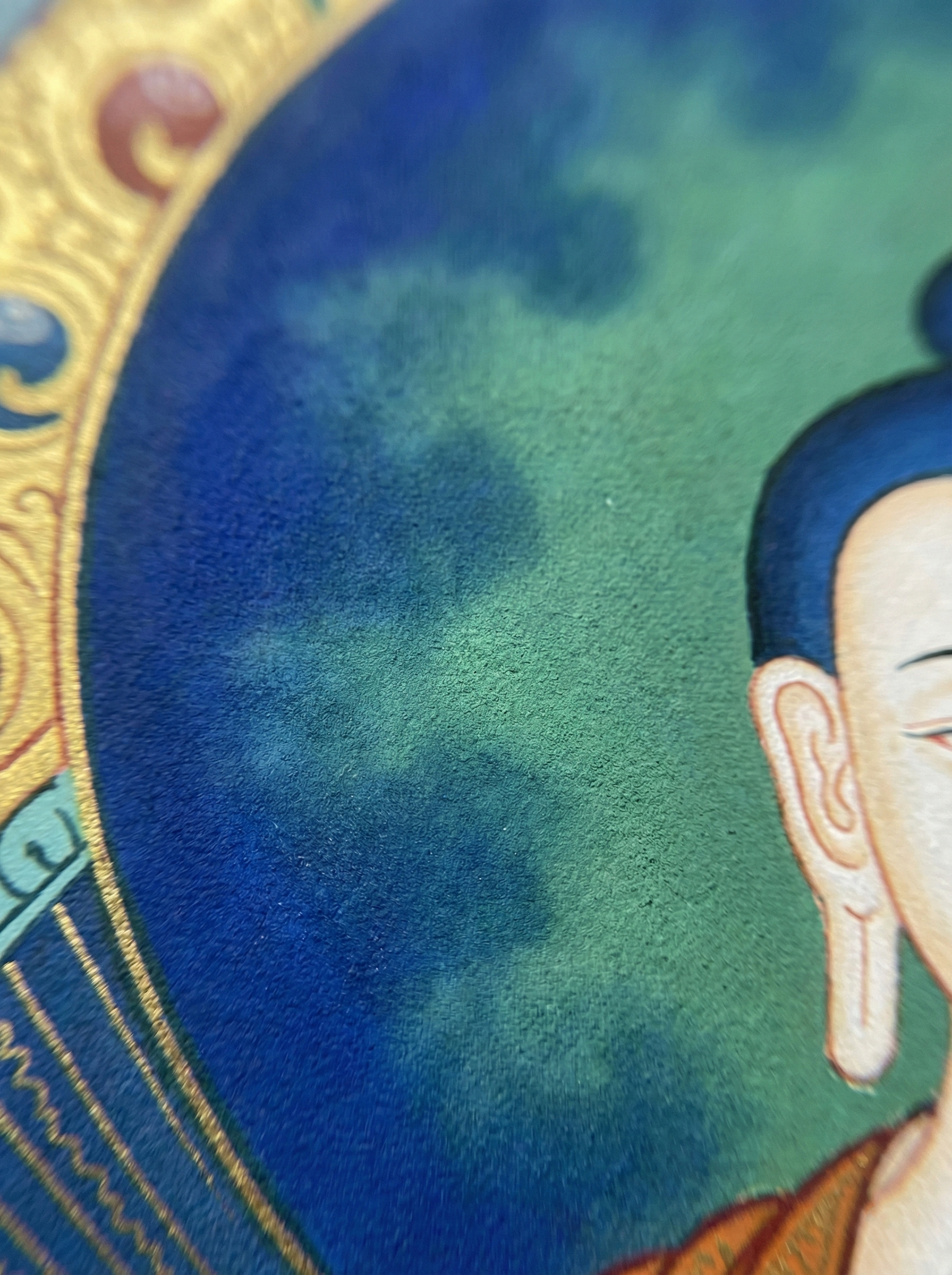
3 Colors: "Mineral Aesthetics" at Your Fingertips
High-quality Thangkas exclusively use pure natural mineral pigments
(e.g., turquoise, lapis lazuli, cinnabar).
Highlights:
Color transitions (shading) should be as natural as clouds and mist,
with no obvious signs of seams.
Texture:
Good Thangka colors are rich but not vulgar,
and the flesh tones should be delicate like real human skin, with a translucent quality.
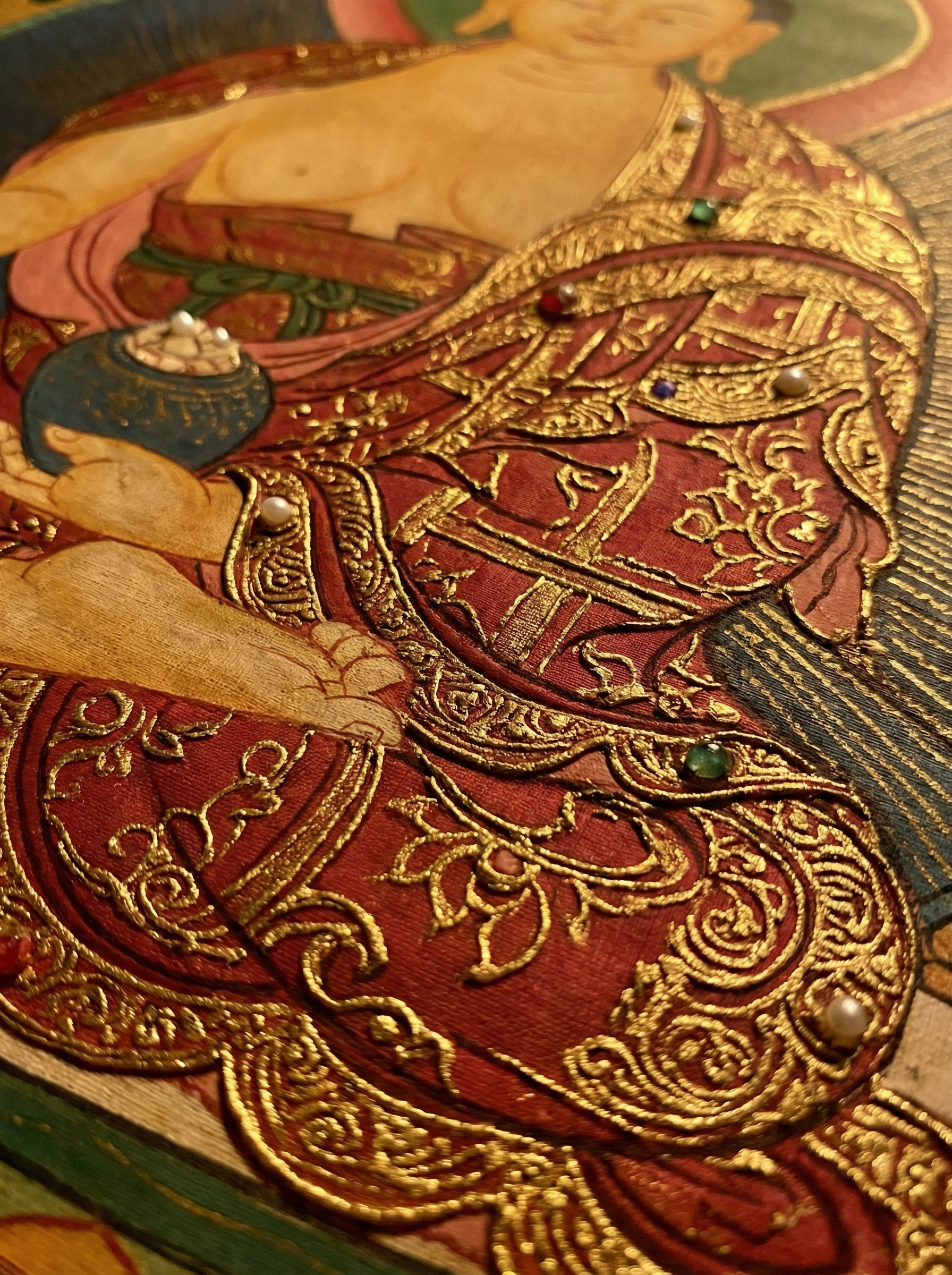
4 Gold Lines: The Ultimate "Luxurious Details"
The "gold outlining" technique is the finishing touch of a Thangka,
using gold powder ground from pure gold.
Observe the craftsmanship:
Look at the gold patterns on the clothing.
The more complex the patterns and finer the lines, the more effort the artist has put in.
Visual:
Good gold lines will shimmer dynamically in the light, with clear layering.
5 Presence: "Soul Resonance" in a Gaze
This refers to the comprehensive vitality of a Thangka.
Compassionate form:
Eyes cast downwards, seemingly smiling yet also engaging you in conversation,
you can feel inner peace when you gaze at it.
Wrathful form:
The expression is fierce and terrifying but awe-inspiring, full of power.
A good Thangka is "alive" and can instantly capture your heart.